
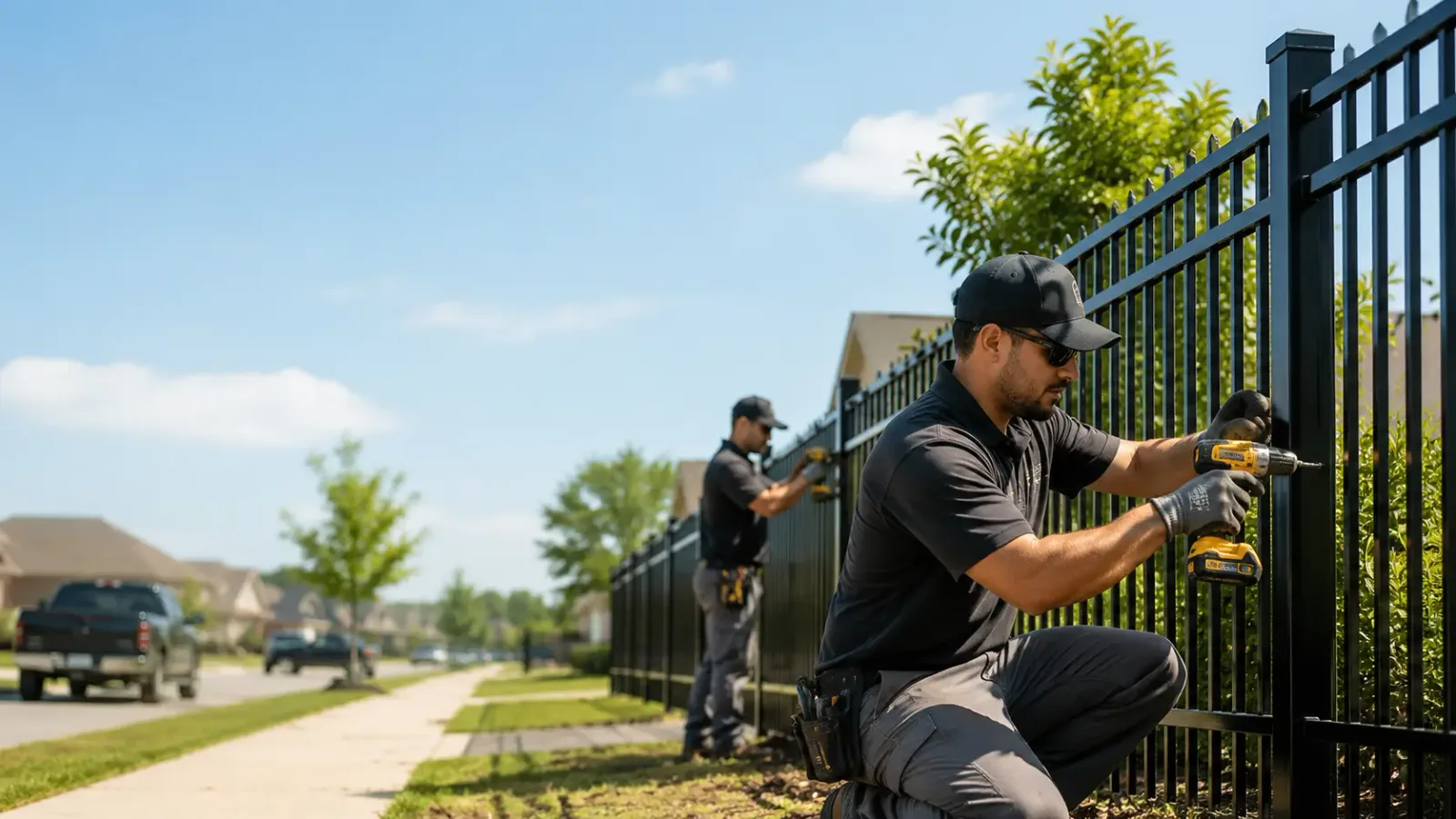
Vinyl gate installation covers walk gates and larger access gates built to match an existing or new vinyl fence line. Vinyl gates need reinforced internal framing that solid vinyl panels don't require, since a gate has to swing repeatedly without sagging – this is where vinyl gate installation differs most from straight fence panel work and why it's worth getting done properly the first time.
You need this when adding access points to a new vinyl fence installation, when an existing vinyl gate has started sagging or dragging on the ground, which is a common failure point if the internal frame wasn't reinforced properly during original installation, or when a gate won't latch consistently anymore due to shifted alignment over time.
We start by confirming the gate opening and which vinyl fence style it needs to match – privacy, semi-private, or picket – so the finished gate is visually consistent with the rest of the fence line. Posts on either side of the gate opening get set with extra attention to depth and concrete setting, since these posts carry more ongoing stress than standard fence posts. The gate itself is built with internal metal or reinforced vinyl framing to prevent the sagging that's common with gates that skip this step, then hung with properly sized hinges and hardware. We adjust the gate to swing freely and latch securely before finishing.
Cost depends on gate width, height, and which fence style it's matching, along with whether it's a standard walk gate or a wider access gate. Properties in Kensal, ND replacing a sagging gate on an otherwise good fence typically need less work than a full new gate installation as part of a larger fence project.
A sagging or misaligned gate is a fixable problem, not a reason to replace the whole fence. Call (877) 357-2520 for an assessment.